TRUSTED BY

Lego
Ubuy
Kuwait
Partner
Elysian
Petsmarket
Nanoknee
Click2drive
Marriot
Open-Universities

Software Development Services

Build custom software solutions that support business operations, product goals, system integration, and long-term growth.

icn_consulting

Software Consulting

Plan software initiatives with expert guidance on requirements, technology selection, architecture, and development priorities.

icn_custom software

Custom Software Development

Build custom software tailored to business requirements, workflows, users, integrations, and long-term business goals.

icn_enterprise software

Enterprise Software Development

Develop enterprise software that supports complex operations, multiple teams, integrations, security, and business requirements.

SaaS Development

SaaS Development

Build SaaS applications with scalable architecture, subscription capabilities, secure access, integrations, and user-focused experiences.

icn_product developemtn

Software Product Development

Turn software product ideas into market-ready applications with product planning, development, testing, and ongoing support.

icn_MVP develpemtn

MVP Development

Validate software ideas through MVP development with essential features, user feedback, testing, and future scalability.

Software Migration & Integration

Software Migration & Integration

Move existing software and connect business systems through migration, API integration, data transfer, and testing.

icn_software modernization

Legacy Software Modernization

Modernize legacy software with updated technologies, improved architecture, stronger security, and better system performance.

Turn your software idea into a business-ready solution.

Build custom software with Vrinsoft to support your users, workflows, integrations, and long-term business goals.

Contact Us

Software Challenges Holding Your Business Back

Complex systems, ageing technology, and changing software requirements can create expensive limitations across business operations.

Challenge 01

Are disconnected systems keeping your business data stuck in separate places?

Outcome You Need:

Vrinsoft connects your core applications into a unified software environment where data can move between systems with greater consistency.

  • Centralized business data
  • Real-time data exchange
  • API-based connectivity
  • Unified system workflows
Challenge 01
Challenge 02

Has your legacy software become too difficult to maintain, extend, or integrate?

Outcome You Need:

Modernize your existing software with updated architecture and technology while preserving the business capabilities your teams depend on.

  • Modern application architecture
  • Updated technology stack
  • Improved system maintainability
  • Safer paths for future upgrades
Challenge 2
Challenge 03

Is your current software struggling as users, transactions, and business requirements increase?

Outcome You Need:

Build software with architecture that can support higher workloads, growing user demand, and increasingly complex business operations.

  • Scalable application infrastructure
  • Flexible system architecture
  • Improved application performance
  • Capacity for future growth
Challenge 3
Challenge 04

Does off-the-shelf software force your business to work around its limitations?

Outcome You Need:

Develop software around your actual processes so your systems support the way your business operates rather than forcing major workflow compromises.

  • Business-specific workflows
  • Custom user roles and permissions
  • Tailored business logic
  • Configurable application features
Challenge 4
Challenge 05

Do you have a software idea but need a clear path from concept to launch?

Outcome You Need:

Turn your software concept into a practical development plan with defined requirements, technology decisions, product priorities, and delivery milestones.

  • Product and technology assessment
  • Defined software requirements
  • Prioritized feature planning
  • Development-ready technical roadmap
Challenge 5

Software Development Process

We follow a structured software development process that connects business goals, technical planning, development, testing, and long-term support.

Get A Free Quote

Technology Stack for Custom Software

Icon-Flutter Flutter
Icon-Swift Swift
Icon-Objective-C Objective C
Icon-Java Java
Icon-Dart Dart
Icon-Kotlin Kotlin
Icon-ReactJS React JS
Icon-Xcode Xcode
Icon-Android-Studio Android Studio
Icon-Appcode Appcode
Icon-AndroidUI AndroidUI
Icon-Jetpack-Compose Jetpack Compose
Icon-SwiftUI SwiftUI
Icon-Xamarin Xamarin
Icon-Cordova Cordova
Icon-PhoneGap PhoneGap
Icon-Fullstack Fullstack
Icon-Web Web
Icon-Cloud Cloud
Icon-Frontend Frontend
Icon-Shopify Shopify
Icon-Python Python
Icon-PostgreSQL PostgreSQL
Icon-MangoDB MangoDB

Build Software That Works for
Your Business With the Right Technology Support

Get the technology expertise you need to build, secure, modernize, and support software for your business.

Talk to Our Experts

Software Development Engagement Models

Choose a software development engagement model based on your project scope, timeline, budget, and development requirements.

Why Partner with Vrinsoft for Software Development

Experienced software teams delivering business solutions across platforms, technologies, and complex operational requirements.

  1. CRM & Customer Management

    Build stronger customer relationships with Salesforce and Microsoft Dynamics 365. Our team develops and customizes CRM software to manage leads, customer data, sales pipelines, service workflows, and business integrations.

  2. Sales & Revenue

    Manage quotations, orders, pricing, pipelines, and revenue workflows through software built around your sales process. Vrinsoft works with Salesforce and Microsoft Dynamics 365 to connect sales operations with wider business systems.

  3. Accounting & Finance

    Manage invoicing, payments, expenses, financial records, and reporting through software tailored to your finance workflows. Vrinsoft works with Odoo and Microsoft Dynamics 365 to connect financial operations with sales and procurement.

  4. ERP & Business Operations

    Manage procurement, inventory, orders, resources, and core operations through connected ERP software. Vrinsoft works with Odoo and Microsoft Dynamics 365 to customize business processes and integrate existing systems.

  5. HR & Payroll

    Manage employee records, workforce processes, payroll workflows, and HR data through connected business software. Vrinsoft works with Workday to support HR operations, integrate business systems, and tailor technology around workforce requirements.

  6. IT Service Management

    Manage service requests, incidents, assets, approvals, and internal support workflows through ServiceNow. Vrinsoft helps businesses customize IT service processes, connect enterprise systems, and build workflows around operational requirements.

  7. Business Intelligence & Analytics

    Turn business data into useful reports and dashboards with Microsoft Power BI. Vrinsoft connects data sources, develops reporting solutions, and builds analytics environments that give teams clearer visibility across business performance.

  8. Integration & API Management

    Connect applications, APIs, cloud platforms, and legacy systems through MuleSoft and Apigee. Vrinsoft develops integration solutions that support data exchange, API management, workflow connectivity, and communication between business systems

Software Solutions for Every Industry

Vrinsoft develops custom software for businesses across industries with different workflows, users, data requirements, and operational needs. Our teams build and integrate software around the way each business operates.

We build healthcare software that supports patient services, clinical workflows, administrative processes, and secure data management.

We develop financial software for transactions, reporting, customer management, compliance workflows, and digital financial services.

We create retail software that connects digital commerce, customer experiences, inventory operations, and order management.

We build logistics software that connects fleet operations, warehouse processes, shipment tracking, and delivery management.

We develop manufacturing software that connects production activities with procurement, inventory management, supply chain processes, and operational reporting.

When Off-the-Shelf Software Falls Short

Your business has specific workflows, systems, and requirements. Vrinsoft develops custom software that addresses those needs while giving your teams greater control over how the software works.

Start Your Software Project

A Smarter Approach to Software Development

Our engineering approach combines iterative delivery, structured collaboration, automated deployment, and technical practices suited to complex software projects.

agile-development

Agile Software Development

Focused development cycles help refine requirements through regular feedback while allowing priorities to evolve as the software takes shape.

scrum-delivery

Scrum Delivery

Short, structured sprints establish clear goals, regular reviews, and visible progress throughout the development cycle.

DevSecOps

DevOps & CI/CD

Automated builds, testing, deployment, and monitoring connect development with operations and support faster, more reliable software releases.

delivery

API-First Architecture

Reusable APIs make it easier to connect software with business systems, third-party platforms, databases, and future applications.

Topical Guide for Software Development Services

Custom Software vs SaaS vs Off-the-Shelf Software: Which is right for you?

Choosing between custom software development, SaaS, and off-the-shelf software affects how a business manages workflows, integrations, data, costs, and future growth. SaaS platforms can provide a quick starting point, while off-the-shelf software can cover established business functions. Custom software solutions offer greater control when standard products cannot support complex processes or specific requirements.

1. Business Fit and Workflow Requirements

The first consideration is how closely the software needs to match existing business processes. Off-the-shelf software usually follows predefined workflows, while SaaS products offer configuration within a fixed product structure. Custom software development services allow the software to be designed around specific operational requirements. For businesses weighing different development approaches, custom software development for small businesses offers useful insights into building software around specific operational needs and growth plans.

  • SaaS works well when your processes closely match the platform’s built-in workflows.
  • Off-the-shelf software can cover common functions such as accounting, CRM, HR, and inventory.
  • Bespoke software development services are better suited to specialized workflows and business rules.
  • Custom software solutions can support unique approval processes, pricing rules, user permissions, and operational logic.

2. Cost, Ownership and Long-Term Value

The initial price can make SaaS or packaged software appear more attractive, but the long-term cost depends on licensing, user growth, integrations, customization, support, and data management. A custom software development company can build a system where the business controls the product roadmap rather than depending entirely on a vendor. Businesses evaluating their software options can compare SaaS subscriptions vs custom software to understand the long-term cost and ownership differences.

  • SaaS usually involves recurring subscription costs based on users, features, or usage.
  • Off-the-shelf software may require separate payments for upgrades, modules, integrations, or additional users.
  • Custom development requires a larger initial investment but can provide greater control over source code and functionality.
  • A custom software development agency can plan the product around long-term business requirements rather than short-term licensing needs.

3. Integration and Data Requirements

Modern businesses rarely operate with one system. ERP, CRM, eCommerce, payment platforms, reporting tools, APIs, and internal applications often need to exchange data. This is where software development consulting services can help determine whether an existing product can support required integrations or whether a custom approach is more practical.

  • SaaS platforms may restrict how deeply external systems can be connected.
  • Off-the-shelf products often depend on available APIs, connectors, and integration modules.
  • Custom software can be designed around ERP, CRM, payment, database, and third-party integration requirements.
  • Custom software development solutions can also support centralized data flows and account-specific business rules.

4. Scalability, Security and Business Complexity

Software needs can change as user numbers increase, operations expand, and business rules become more complex. A platform that works for a smaller operation may create limitations once there are multiple locations, departments, customer types, or connected systems. An enterprise software development company can design architecture around these requirements from the beginning.

  • Custom applications can support different user roles, permissions, business units, and workflows.
  • Enterprise software can be designed for higher transaction volumes and larger datasets.
  • Security controls can be planned around the organization’s data and access requirements.
  • Customized software development services can support new modules without forcing the business into a fixed product structure.

5. Time to Market and Future Development

SaaS and off-the-shelf products usually provide faster implementation because the core product already exists. Custom development takes more planning, but it provides a development path based on the organization’s priorities. With the right software consulting services, businesses can decide which capabilities should launch first and which should be added later.

  • SaaS can be practical when speed is more important than deep customization.
  • Off-the-shelf platforms can reduce initial development work for standard business functions.
  • Outsourced software development services can provide additional engineering resources when internal teams need support.
  • A software development company can continue developing new features, integrations, modernization work, and technical improvements as requirements evolve.

The right choice depends on the gap between what existing software provides and what the business actually needs. Vrinsoft provides software development services for businesses that need more control over workflows, integrations, architecture, and future development.

Rebuild, Replatform or Refactor: Choosing a Legacy Modernization Strategy

Legacy applications often remain essential to daily operations even when their architecture, technology stack, or infrastructure has become difficult to maintain. Replacing them entirely is not always the right answer. A legacy modernization strategy can take several paths, including rebuilding the application, replatforming it onto modern infrastructure, or refactoring the existing codebase. The right approach depends on business risk, technical debt, data, integrations, performance requirements, and future development plans.

1. Rebuild When the Existing Application Has Reached Its Limits

A rebuild involves creating a new application while using the existing system as a reference for business rules, data requirements, and workflows. This approach can make sense when the current architecture has become too difficult to extend or when outdated technologies are restricting future development.

  • Replace unsupported frameworks and outdated programming languages.
  • Redesign workflows that no longer match current operations.
  • Create a modern architecture for future software development.
  • Rework integrations, security controls, and user permissions.
  • Preserve important business logic while removing technical limitations.

A custom software development company can use discovery and software consulting to separate essential business functionality from outdated implementation details. This creates a clearer foundation for custom software solutions without carrying every limitation of the original application into the new system.

2. Replatform When the Core Application Still Works

Replatforming changes the underlying environment without completely replacing the application. This can be useful when the software still supports important business processes but runs on aging infrastructure or lacks modern deployment capabilities.

  • Move applications to cloud infrastructure.
  • Upgrade databases and operating environments.
  • Introduce managed cloud services where appropriate.
  • Improve deployment, monitoring, backup, and recovery processes.
  • Reduce infrastructure constraints without rebuilding every application component.

For many organizations, replatforming offers a practical middle path. Software development services can combine infrastructure changes with targeted application improvements, allowing businesses to modernize specific parts of the environment while keeping proven functionality in place.

3. Refactor When the Business Logic Is Still Valuable

Refactoring improves the internal structure of existing software without changing its core behavior. It is often appropriate when the application remains useful but its code has become difficult to maintain, test, integrate, or extend.

  • Break large codebases into manageable components.
  • Remove duplicated or unnecessary code.
  • Improve application performance and maintainability.
  • Introduce automated testing around important functionality.
  • Prepare existing software for new APIs and integrations.

A software development agency can use incremental refactoring to reduce technical debt while keeping business operations running. This approach can be especially useful for enterprise applications where a complete replacement would create unnecessary operational risk.

4. Consider Data, Integrations and Business Continuity

Modernization involves more than the application itself. Legacy systems often connect with ERP platforms, CRM software, databases, payment systems, reporting tools, APIs, and internal applications. These dependencies can determine which modernization path is practical.

  • Map existing systems and application dependencies.
  • Identify critical data flows and integration points.
  • Plan data migration and validation before major changes.
  • Maintain essential integrations during transition.
  • Create rollback and continuity plans for key business processes.

Software migration and software integration planning should therefore be part of the modernization project from the beginning. A software development consulting services approach can help identify dependencies before they become migration problems.

5. Choose the Strategy Around Future Software Requirements

The best modernization strategy is not always the one that requires the least development. Businesses should consider where the software needs to go over the next several years and what architecture will support that direction.

  • Rebuild when the existing architecture prevents meaningful future development.
  • Replatform when infrastructure is the main limitation.
  • Refactor when the underlying application remains valuable.
  • Combine approaches when different parts of the system have different needs.
  • Priorities security, scalability, integration, and maintainability.

A phased legacy software modernization program can also combine refactoring, replatforming, and targeted redevelopment rather than forcing one strategy across the entire environment. A software development service provider like Vrinsoft understands the importance of modernization and offers better solutions that do not interrupt the operation.

From AI Features to AI-Native Software Products

Adding an AI feature to existing software can improve a specific workflow, but an AI-native software product goes further. AI becomes part of the product architecture rather than an add-on placed on top of traditional functionality. The difference affects data pipelines, application logic, user experience, infrastructure, model selection, and how the product evolves over time.

1. Start With the Product Problem

AI should have a clear role within the software rather than being added simply because the technology is available. The strongest applications use AI where prediction, generation, classification, recommendations, or natural-language processing can improve a meaningful part of the workflow.

  • Identify repetitive decisions that require large amounts of data.
  • Find workflows where users spend significant time analyzing information.
  • Define the business outcome before selecting an AI model.
  • Separate AI use cases from standard application functionality.
  • Establish measurable indicators for accuracy, adoption, and business impact.

Customized software development services can combine conventional application logic with AI capabilities when a workflow needs more than a standalone chatbot or automation tool.

2. Build the Data Foundation First

AI performance depends heavily on the quality, availability, and structure of the data feeding the system. An AI-native product therefore needs data architecture that supports collection, processing, storage, retrieval, and governance as part of the software design.

  • Connect operational databases and approved external data sources.
  • Establish pipelines for cleaning and preparing business data.
  • Use structured metadata to improve search and retrieval.
  • Apply access controls to sensitive information.
  • Monitor data quality as the application grows.

Our AI software development company can design the application and data layers together, so AI features can access relevant information without creating disconnected data workflows.

3. Design AI as Part of the Application Architecture

An AI feature should work with the rest of the software rather than operate as an isolated component. This may involve APIs, retrieval systems, workflow engines, business rules, databases, and model services working together.

  • Connect AI models through secure APIs.
  • Combine model output with deterministic business rules.
  • Use retrieval-augmented generation where domain context is required.
  • Separate model services from core application logic where appropriate.
  • Create fallback workflows for uncertain or low-confidence results.

AI software development becomes more effective when model capabilities are matched with a practical application architecture rather than treated as the entire solution.

4. Design the Experience Around Human and AI Roles

AI-native products change how users interact with software. Instead of navigating every step manually, users may review recommendations, approve generated outputs, ask questions in natural language, or supervise automated actions.

  • Give users visibility into important AI-generated results.
  • Allow manual review for high-impact decisions.
  • Provide controls for correcting inaccurate outputs.
  • Show relevant context behind recommendations where practical.
  • Keep standard workflows available when AI is unsuitable.

For enterprise products, enterprise software development also needs to consider user permissions, audit trails, data access, and organizational policies when introducing AI-driven workflows.

5. Plan for Continuous AI Improvement

An AI product requires ongoing evaluation because models, business data, user behavior, and requirements change. Launching the first AI capability is only the beginning of the product lifecycle.

  • Monitor model performance after deployment.
  • Track feedback and incorrect outputs.
  • Evaluate model cost and response latency.
  • Update prompts, retrieval sources, models, or workflows as needed.
  • Test new AI capabilities before introducing them to production users.

For enterprise products, enterprise software development also needs to consider user permissions, audit trails, data access, and organizational policies when introducing AI-driven workflows.

Cloud-Native Development for Modern Enterprise Applications

The design, deployment, scaling, and maintenance of enterprise applications are all altered by cloud-native development. Instead of treating the cloud as only a hosting environment, cloud-native software uses modern architecture patterns such as microservices, containers, APIs, automated deployment, and managed cloud services. For businesses building or modernizing enterprise software, this approach can create a stronger foundation for continuous development and changing workloads.

1. Design Applications Around Independent Services

Traditional applications often place multiple business functions inside one large codebase. Cloud-native development can separate these functions into smaller services that can be developed, deployed, and scaled independently when the architecture requires it.

  • Use microservices architecture for applications with clearly separated business domains.
  • Define APIs between services and external enterprise systems.
  • Isolate critical functions to reduce dependency between application components.
  • Allow individual services to receive updates without redeploying the entire application.
  • Use service-based architecture where different workloads have different scaling requirements.

This approach can be useful for enterprise software development where applications support multiple departments, business units, customer groups, or operational workflows. A custom software development company can assess which components should remain together and where service separation provides genuine technical value.

2. Use Containers for Consistent Deployment

Containers package application code and its dependencies into a consistent runtime environment. This can help reduce differences between development, testing, and production environments while supporting modern deployment practices.

  • Package application components into portable containers.
  • Use container orchestration for larger distributed applications.
  • Standardize development and deployment environments.
  • Support independent service releases where required.
  • Apply resource limits and workload controls at the infrastructure level.

Platforms such as Kubernetes can manage container workloads across cloud environments. For custom software development services, containerization can also make it easier to run different application components with clearly defined dependencies.

3. Connect Development With DevOps and CI/CD

Cloud-native applications depend on more than application architecture. DevOps, continuous integration, and continuous delivery connect software development with automated testing, deployment, infrastructure management, and monitoring.

  • Automate builds whenever code changes are approved.
  • Run automated testing before deployment.
  • Use CI/CD pipelines for repeatable software releases.
  • Introduce infrastructure as code for consistent environments.
  • Monitor deployments and application health after release.

This can support software development services where applications require frequent releases or multiple development teams. A structured CI/CD pipeline also creates a repeatable path from development through testing and production.

4. Build for Scale, Reliability and Observability

Enterprise workloads can change significantly based on users, transactions, locations, integrations, and seasonal demand. Cloud-native architecture can allow specific components to scale independently rather than increasing resources across the whole application.

  • Scale application services based on workload requirements.
  • Use load balancing for distributed traffic.
  • Introduce monitoring across infrastructure and applications.
  • Track logs, metrics, and distributed requests.
  • Design recovery processes for infrastructure or service failures.

Enterprise software development companies can use cloud-native patterns to support large applications that require predictable performance and operational visibility. Observability also helps technical teams identify performance problems before they affect critical business processes.

5. Modernize Existing Enterprise Applications

Cloud-native development is also relevant when businesses are moving older applications toward modern infrastructure. A complete rebuild may not always be necessary. Replatforming, refactoring, containerization, and API development can modernize selected components while preserving valuable business functionality.

  • Move suitable workloads to cloud infrastructure.
  • Modernize selected components instead of replacing everything at once.
  • Expose legacy functionality through APIs where practical.
  • Introduce cloud-native services around existing applications.
  • Gradually replace outdated components through a phased roadmap.

Case study

B2B eCommerce Platform

Trade-Only Commerce With ERP & CRM Integration

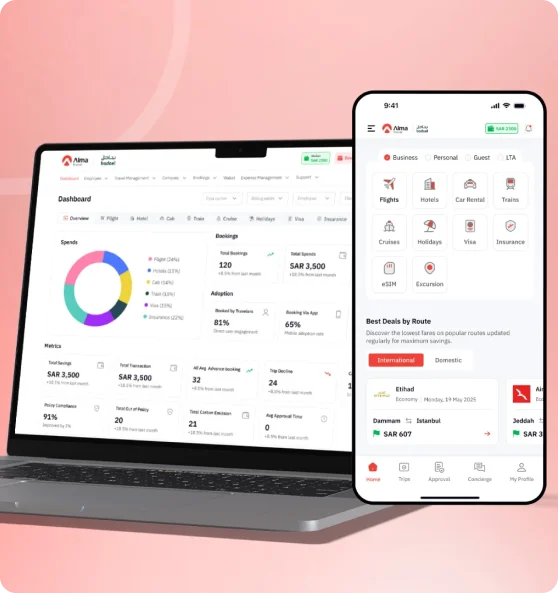
Almatravel
  • Challenges
    • Managing customer-specific products, pricing, quotes, orders, and credit
    • Connecting purchasing workflows with ERP, CRM, and quotation systems
  • Helped
    • Developed a trade-only eCommerce platform with account-based purchasing
    • Connected products, pricing, orders, invoices, quotes, and customer accounts
  • Outcome
    • 35% less manual administration across trade purchasing workflows
    • 3X customer accounts supported through the digital purchasing channel
Almatravel

Mental Health EMR

Digital Clinical Management for Mental Health Services

Mental Health EMR Systems
  • Challenges
    • Delays in mental health referrals and appointment management
    • Disconnected clinical processes affecting patient and staff coordination
  • Helped
    • Built a GP-compliant mental health EMR platform
    • Centralized appointments, referrals, patient records, and treatment workflows
  • Outcome
    • 30% faster referral processing for participating clinics
    • 100+ clinical workflows managed through one platform
Mental Health EMR Systems

Vehicle Dealership Platform

Online Vehicle Buying & Maintenance Services

Vehicle Dealership Platform
  • Challenges
    • Making second-hand vehicle purchases easier for customers
    • Managing inspections, valuations, warranties, and additional vehicle services
  • Helped
    • Developed an online platform for vehicle purchasing and maintenance services
    • Added inspections, vehicle valuations, warranties, insurance, and home services
  • Outcome
    • 25% increase in vehicle sales across supported dealerships
    • 3+ additional services managed through the platform
Vehicle Dealership Platform

Latest insights

50+ IT Statistics and Insights You Should Know (2025)
Nov 15, 2024 1 min read
50+ IT Statistics and Insights You Should Know (2025)

IT is one of the fastest growing industries in the 21st century, with technologies evolving every now and...

Read more
Whitepaper: Outsourcing Software Development for Startups: What You Need to Know
Oct 30, 2024 2 min read
Whitepaper: Outsourcing Software Development for Startups: What You Need to Know

Why should Startups outsource software development to top IT companies? The initial phase for any business owner is...

Read more
How Much Does it Cost to Hire a Software Developer in India?
Oct 18, 2024 2 min read
How Much Does it Cost to Hire a Software Developer in India?

Thinking about the cost to hire a software developer in India? The average cost of hiring a software...

Read more

No videos found.

Client Experiences That Speak for Our Work

Our clients share their experiences working with our development teams across custom software, enterprise applications, integrations, and digital transformation projects.

Client Reviews
Client Platforms

Jonathan

CEO, Core

We required a custom web solution tailored to specific business needs and user expectations, offering a unique and tailored experience. Vrinsoft Pty Ltd designed and developed a website for us where users can provide memories of passed loved ones. They streamlined the project scope and built the site. This platform was built allowing users to explore, contribute and memorialize memorials. Vrinsoft Pty Ltd met all our expectations on an extremely high professional level and delivered the project within the given deadlines. The team led by Samir Ghodiya and Anushka Bhavsar seamlessly managed the project, implementing all features requested by us. Their communication right from the start with initial contact with Krushna Shah was consistent and clear. We highly recommend Vrinsoft.

Bruwer Geldenhuys

Founder, Rest in love Group

Vrinsoft had been managing my digital marketing for quite a while, so I already knew how consistent their support was. When I decided it was time to redesign my website, I asked them to take care of the project. The process stayed clear from the start, and they made it simple for me to follow each stage. They understand what I wanted and shared practical suggestions that helped shape the site.

The redesigned website turned out clean, quick and easy for my patients to use. After it went live, I continued working with their marketing team, and the number of enquiries has grown at a steady pace. They stay easy to reach, communicate well, and sort out any points without delay. I'm pleased with the overall experience.

Dr. Shirali

Founder, Aldgate Dental Care Group

We recently worked with Vrinsoft to develop our very first app, and the whole experience exceeded our expectations. Having never built an app before, we honestly didn’t know where to start—but the team made everything easy to understand and guided us through every step.

They were always on time, open to our ideas, and also willing to offer their own suggestions, which really helped shape the final product. Their communication was excellent; we were kept up to date throughout the entire process and always felt included, like we were part of their team.

They were fun, friendly, and professional, and they created an app we’re truly proud of. We’d definitely recommend them to anyone looking for a reliable and collaborative development partner.

Chaim & Rochelle

Founder, Link My Life Group

The Core team have now been working with Vrinsoft for two years and the combined teams now have a number of delivery milestones under their belts. Vrinsoft are big enough to have the strength and depth to deliver complex projects, but have retained their entrepreneurial traits and customer relationships, making them an ideal technology partner for Core. Vrinsoft continue to deliver for us and indeed continue to secure more work from us as a result of their customer-focussed attitude, value for money and flexibility.

Tony Greaves

Founder, Core Group

We shortlisted them as they are one of the best app development companies in Saudi Arabia. The Vrinsoft team delivered a polished product that improved our customer engagement. We are looking forward to working with them in the future.

Hamad Al-Kandari

CEO

We partnered with Vrinsoft to build a mobile app that was truly unique. Our app was delivered on time and had a great design. Their attention to detail and commitment to quality set them apart.

Fatima Al Rashed

Product Manager

Working with Vrinsoft helped transform our business. Their team developed a mobile app that aligned with our brand and all the features we were looking for. The entire process was smooth, and they truly exceeded our expectations.

Ali Al Mutairi

Managing Director

After a lot of research, we finally decided to work with Vrinsoft, and we are so happy that we chose them. The experts used their knowledge and skills to make a website by using exceptional technologies and trends, and we are so happy with the results they have delivered.

Stuart Tozer

CEO Founder

Vrinsoft was the perfect choice when it comes to delivering the best services. They used their knowledge and provided us the ablest solution. We had a wholesome experience with their team as they fulfilled all our requirements by tackling the complexities.

Jonathan Murray

CEO Founder

At first, we were hesitant to give them our project, but to our surprise, they did an excellent job. We are so happy that we hired Vrinsoft for website development services, because they tailored all our requirements, and we have got the best feedback from the users of our website.

Dhanuka

Technical Head

We chose Vrinsoft, and we wanted them to create the iOS and Android. The team easily handled all the complexities and casualties in the app, and they presented us better than we ever expected. We would definitely recommend Vrinsoft for the paramount services.

Zachary Roumanos

Co-founder

Got questions? We’ve got answers

Talk to Our Team

IP: 216.73.216.95

Assess technical expertise, relevant projects, communication, QA practices, security, and engagement models before selecting a partner for your outsourced software development service.

Businesses across healthcare, financial services, retail and eCommerce, logistics, transportation, manufacturing, and other sectors can use our software development services.

Secure access controls, protected integrations, data protection practices, and software testing help keep confidential business information protected throughout development.

Functional, integration, regression, performance, security, compatibility, and usability testing help validate software quality across development, deployment, and subsequent releases.

The cost of Custom Software Development Services depends on project scope, complexity, integrations, technology, features, resources, and timeline.